Shift work sleep disorder (SWSD) is a circadian rhythm sleep-wake disorder, not just bad scheduling. The ICSD-3 criteria, how it differs from ordinary night-shift fatigue, and the light, anchor-sleep, and melatonin levers with the doses.
SWSD is a diagnosis, not a synonym for being tired on nights
Shift work sleep disorder is a recognized circadian rhythm sleep-wake disorder in the International Classification of Sleep Disorders (ICSD-3, AASM). The core criterion is insomnia, excessive sleepiness, or both, that is temporally linked to a recurring work schedule overlapping the usual sleep time, persists for at least three months, and is not better explained by another sleep disorder, medication, or substance. The distinction matters: nearly everyone feels rough on a night shift, but SWSD describes clinically significant, persistent sleep loss and impairment driven by the schedule. Estimates of prevalence among night and rotating workers vary widely by definition; not every shift worker develops the disorder, but a substantial minority does.
Why night work breaks sleep: the circadian clock will not move on command
The problem is a forced mismatch between the work schedule and the suprachiasmatic-nucleus clock, which is anchored by light. A night worker is asked to be alert near their core-body-temperature minimum (when alertness is lowest) and to sleep during the biological day (when the clock is actively promoting wake). Because the clock entrains primarily to light (Wright et al. 2013, Curr Biol), and the morning commute home delivers a large dose of exactly the wrong-timed light, most night workers never fully shift; they live in a state of chronic misalignment. This is why SWSD is not a willpower problem and why sleep hygiene alone is insufficient.
How it differs from insomnia, DSPS, and ordinary fatigue
The differentiator is the link to the schedule. Ordinary insomnia persists regardless of work timing. Delayed sleep phase syndrome (DSPS) is a stable late clock that shows up even without shift work. SWSD symptoms track the roster: they appear during night-work blocks and tend to ease on days off or vacation when the person reverts to daytime living, only to return when night work resumes. If sleep problems persist on a normal day schedule with adequate time in bed, the cause is probably not SWSD. Loud snoring with witnessed pauses points to apnea, not a circadian disorder. Sorting this out is clinical; this is educational, not a diagnosis.
Light is the dominant lever (when to seek it, when to block it)
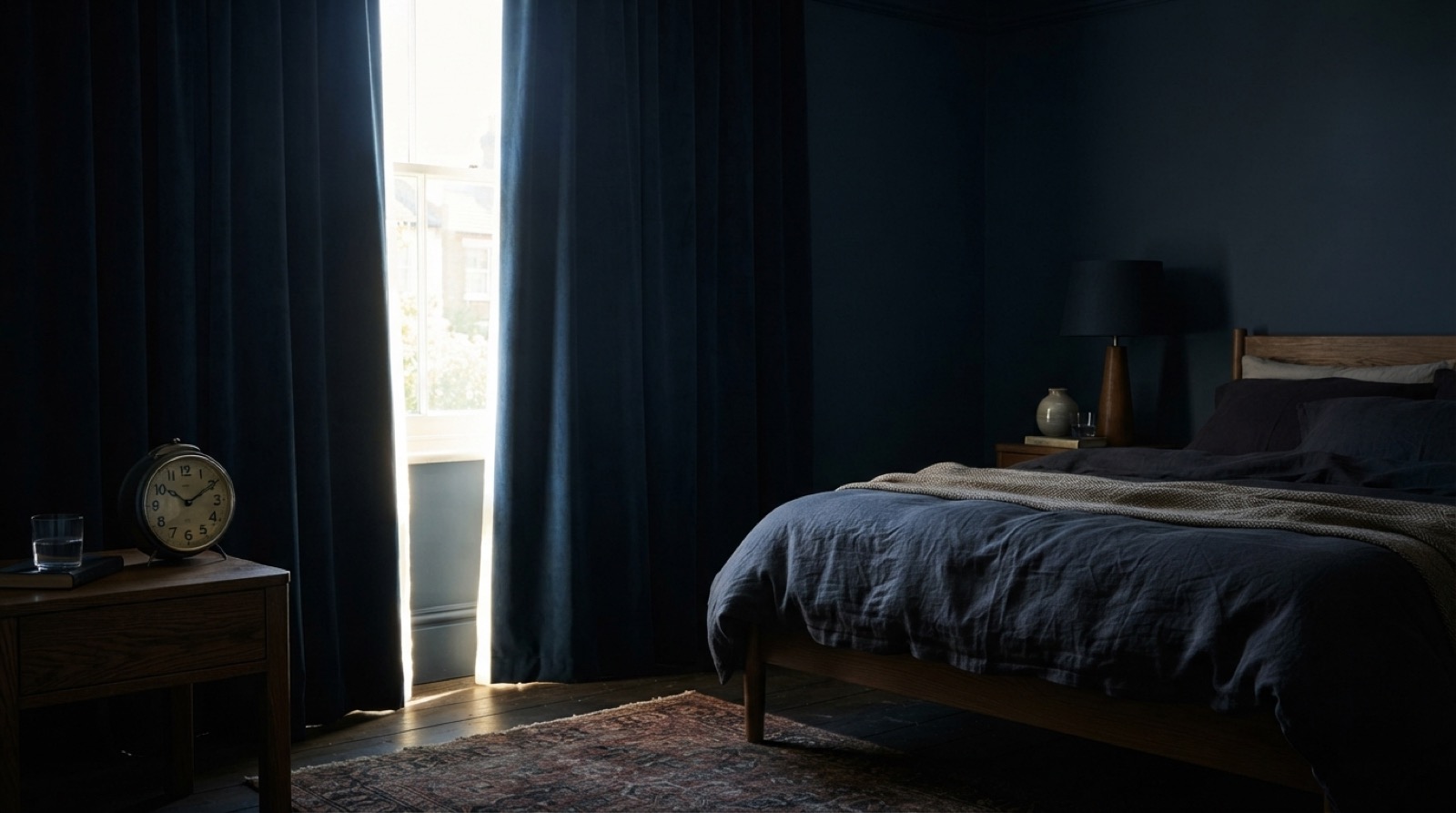
Light timing is the most powerful intervention. Czeisler et al. 1990 (N Engl J Med) showed that scheduled bright light during night work plus darkness during daytime sleep could shift the circadian clock of night workers, improving alertness and day sleep. The practical protocol (summarized by Smith & Eastman 2012, Nat Sci Sleep): seek bright light (~1,000-10,000 lux) during the first half of the shift to promote a phase delay, then wear blue-blocking glasses on the commute home to prevent the rising sun from pulling the clock back, and sleep in a fully darkened room. Getting the blocking step wrong (skipping the glasses, sleeping in a light room) is the single most common reason the strategy fails.
Anchor sleep, caffeine, and napping
Protect a consistent daytime sleep window as an anchor: a dark, cool (~18 degrees C), sound-masked room, phone silenced, household informed. A short nap (~20-30 min) before the shift or on a break can reduce on-shift sleepiness without the grogginess of a longer one (see the napping-protocol guide). Caffeine helps if timed early: it is useful at the start of the shift but should stop ~4-6 hours before the daytime sleep period because its half-life of ~5-6 hours otherwise fragments that sleep (Drake et al. 2013). Permanent night schedules are easier to manage with these levers than fast-rotating ones, which rotate faster than the clock can entrain.
Where melatonin and prescription options fit (and their limits)
Low-dose melatonin (0.5-3 mg) taken before the daytime sleep period can modestly improve day-sleep duration, though the Liira et al. 2014 Cochrane review rated the evidence as low quality and the effect on sleepiness during shifts as small. It is an adjunct to light timing, not a replacement. Prescription wake-promoting agents (modafinil, armodafinil) are approved in some jurisdictions for excessive sleepiness in SWSD and reduce sleepiness modestly, but they carry side effects and do not fix the underlying misalignment; they are clinician-prescribed decisions. Hypnotics may lengthen day sleep slightly with similar caveats. None of this substitutes for evaluation by a sleep clinician when symptoms are persistent or safety is at risk. Exact approval status and labeling for modafinil and armodafinil in SWSD differ by country.
Questions logged on this protocol
What is shift work sleep disorder?
Shift work sleep disorder (SWSD) is a circadian rhythm sleep-wake disorder defined in the ICSD-3 (AASM) as insomnia, excessive sleepiness, or both, that is causally linked to a work schedule overlapping the normal sleep period, lasts at least three months, and is not better explained by another condition. It is the clinical, persistent form of the misalignment that night and rotating-shift work imposes, distinct from the ordinary tiredness almost everyone feels on a night shift. Diagnosis is made by a clinician, often a sleep specialist, not by a questionnaire alone.
How is it different from just being tired on night shifts?
Severity, duration, and impairment. Feeling rough for a night or two is normal. SWSD is persistent (the three-month criterion), clinically significant sleep loss or sleepiness that impairs function and safety and is tied to the recurring schedule. The telltale sign is that symptoms track the roster: they worsen during night-work blocks and ease on extended days off when you revert to daytime living. If sleep problems persist even on a normal daytime schedule, the cause is probably something other than SWSD, which is one reason a clinical evaluation matters.
What is the single most effective thing I can do?
Get light timing right. Seek bright light (~1,000-10,000 lux) during the first half of your shift, then wear blue-blocking glasses on the commute home and sleep in a fully dark room. Czeisler et al. 1990 (N Engl J Med) demonstrated that this combination can actually shift the circadian clock of night workers and improve both alertness and daytime sleep. The most common failure is skipping the blue-blockers, because morning sunlight on the way home pulls the clock straight back and undoes the shift you worked all night to build.
Should I take melatonin for shift work?
It can help modestly as an adjunct, not as a fix. A low dose (0.5-3 mg) taken before your daytime sleep period may lengthen day sleep somewhat, but the Liira et al. 2014 Cochrane review rated the evidence as low quality and found only a small effect. Melatonin works best alongside the light and darkness strategy, not instead of it. Keep the dose low (CircadianStack's default is to avoid high-dose melatonin), and discuss timing and use with a clinician, especially if you take other medications.
Will my body ever adjust to permanent night shifts?
Partially, and only with the right light and dark behavior. A fixed permanent night schedule is far easier to entrain than a fast-rotating one, and disciplined bright-light-on-shift plus blue-blockers-and-darkness-after can produce a substantial circadian shift in some workers (Czeisler et al. 1990). But complete adjustment is uncommon in real life because days off and sunlight on the commute keep pulling the clock back toward day. Fast-rotating schedules generally rotate faster than the clock can move, so full entrainment is usually not achievable; the goal there is damage limitation, not adaptation.
When should I see a doctor about shift work sleep?
See a clinician if sleep problems or daytime sleepiness tied to your shifts persist beyond a few weeks despite good light, sleep, and caffeine practices, or sooner if sleepiness is severe. Drowsy driving, microsleeps, or nodding off during the shift are safety emergencies, not tuning problems: stop driving and seek help. Also seek evaluation if there is loud snoring with witnessed breathing pauses (possible apnea) or symptoms that persist even on a normal daytime schedule. A sleep specialist can confirm SWSD, rule out other disorders, and discuss prescription options where appropriate. This article is educational and not medical advice.
- [01]
- [02]
- [03]
- [04]
- [05]
- [06]
Other stacks in this hub
Is Insomnia Genetic? What Twin Studies and Genome Research Actually Show
Insomnia does run in families, and large genetic studies have found real inherited risk, but genes set a vulnerability rather than a destiny. What twin studies and genome-wide research show about the heritability of insomnia, why the environment and habits still decide whether that vulnerability becomes a lasting problem, and why the treatment is the same either way.
What Causes Insomnia: The Triggers That Start It and the Habits That Keep It Going
Insomnia is rarely caused by one thing. The most useful model separates the traits that make you vulnerable, the event that triggers a bad stretch, and the coping habits that turn a few rough nights into a lasting problem. What the research says about stress, caffeine, an irregular schedule, medical and psychiatric causes, and why the behaviors that feel helpful at 3am are often what keep insomnia alive.
Night Sweats: Why You Sweat in Your Sleep and When It Signals Something
Sleep is supposed to run cool, so sweating through the night is a sign the body's temperature control has been pushed the wrong way. What the physiology says about the core temperature drop that sleep depends on, the everyday causes like a hot room, alcohol, and bedding, the hormonal and medical causes worth knowing, and the red flags that mean night sweats need a doctor.