Anchor sleep, light exposure on shift, reverse-shifting for days off: the protocols for permanent and rotating night-shift workers.
Questions logged on this protocol
Should I try to fully flip my circadian rhythm?
Almost never for rotating shifts. Smith & Eastman 2008 (Sleep Med Clin) argue for 'compromise phase position', a partial shift that works on nights and recovers partially on days off. Full reversal takes 7+ days and is undone by two days off. For permanent night shifts (stable, 5+ nights/week, blackout bedroom), full reversal is feasible and the standard protocol.
What is 'anchor sleep'?
A consistent 4-6 hour sleep window kept across both shift days and off days. For a night-shift worker who sleeps 08:00-15:00 on shift days, anchoring the 10:00-14:00 block across off days preserves enough entrainment that the next shift block is less brutal. The remaining daily sleep flexes around the anchor. Described in shift-work sleep management literature (Åkerstedt & Wright 2009).
When should I use caffeine?
First half of shift, cut off 6-8 hours before your intended sleep. For a shift-worker sleeping 08:00-15:00, that means no caffeine after ~00:00-02:00. Drake et al. 2013 (J Clin Sleep Med) showed caffeine 6 hours before sleep still reduces total sleep time by ~1 hour. The trap on a 12-hour shift is the 04:00 energy drink; it trashes the post-shift sleep.
What about melatonin before daytime sleep?
Limited benefit. Sack et al. 2007 (Sleep) showed small improvements in daytime sleep duration with low-dose melatonin (0.5-3mg) taken 30 min before daytime sleep. The effect is real but modest. Light hygiene (blackout curtains, blue-blockers on commute) does more. If you use melatonin, stay at physiological doses (0.3-0.5mg) and treat it as a minor additive, not the protocol's spine.
How do I sleep during the day?
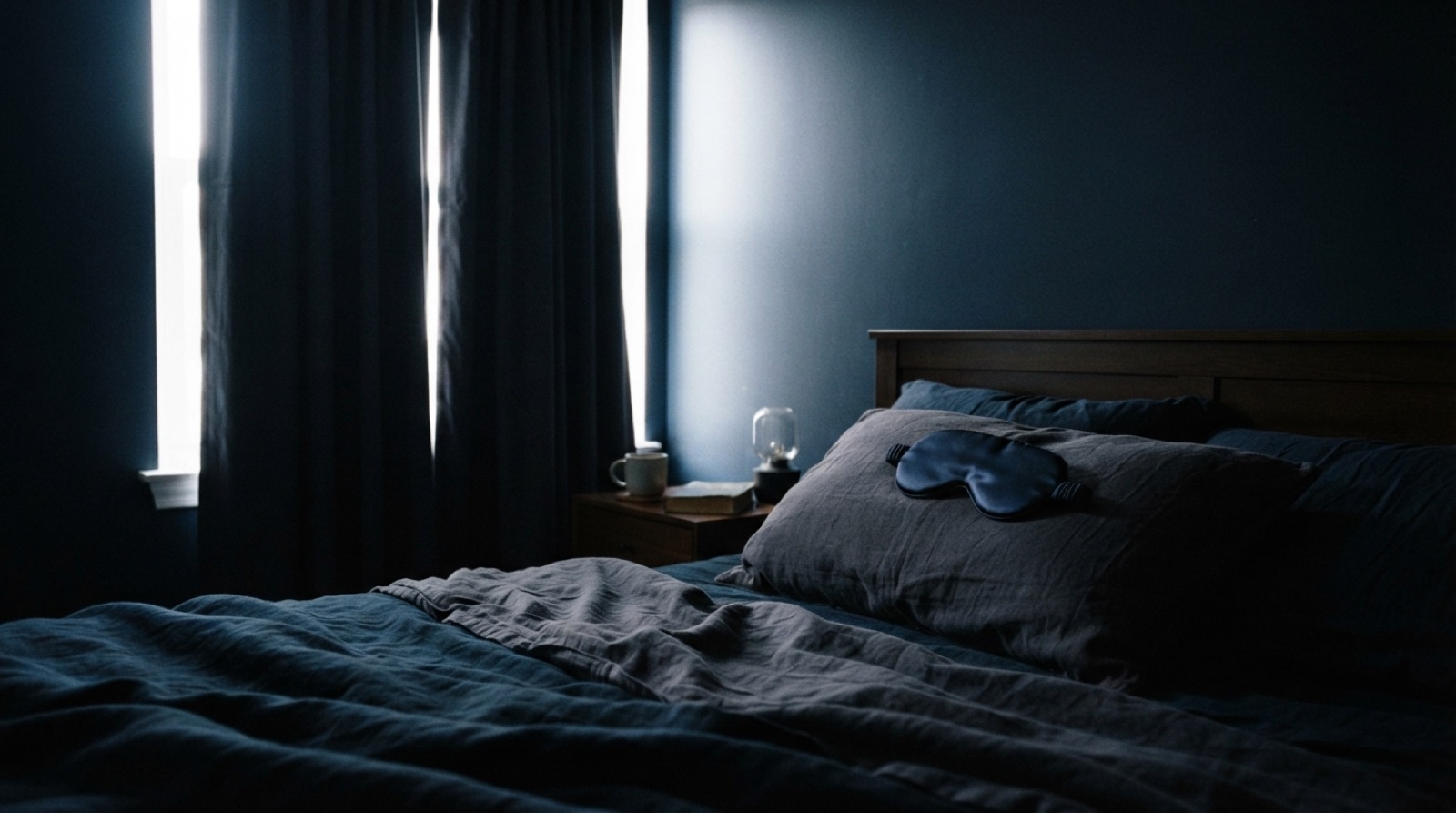
Three variables dominate: light (blackout curtains or eye mask), temperature (65-68°F / 18-20°C, lower than you think), and noise (earplugs or white noise). A 2010 AASM position (Morgenthaler et al., Sleep) identifies bedroom environment as the most consistent predictor of daytime sleep duration in shift workers. Expensive sleep supplements buy less than a $40 blackout curtain.
What is shift work disorder?
A clinical diagnosis (ICSD-3) when shift-related insomnia or excessive sleepiness persists, causes impairment, and can't be attributed to another cause. Roughly 10-30% of shift workers meet criteria (Drake et al. 2004, Sleep). If sleep stays below 5 hours/24h, on-shift sleepiness is causing errors, or symptoms persist 3+ months despite protocol adherence, a sleep medicine evaluation is the next step. AASM guidelines (Morgenthaler et al. 2007) support modafinil or armodafinil as second-line in diagnosed shift work disorder.
- [01]
- [02]
- [03]
- [04]
- [05]
Other stacks in this hub
Is Insomnia Genetic? What Twin Studies and Genome Research Actually Show
Insomnia does run in families, and large genetic studies have found real inherited risk, but genes set a vulnerability rather than a destiny. What twin studies and genome-wide research show about the heritability of insomnia, why the environment and habits still decide whether that vulnerability becomes a lasting problem, and why the treatment is the same either way.
What Causes Insomnia: The Triggers That Start It and the Habits That Keep It Going
Insomnia is rarely caused by one thing. The most useful model separates the traits that make you vulnerable, the event that triggers a bad stretch, and the coping habits that turn a few rough nights into a lasting problem. What the research says about stress, caffeine, an irregular schedule, medical and psychiatric causes, and why the behaviors that feel helpful at 3am are often what keep insomnia alive.
Night Sweats: Why You Sweat in Your Sleep and When It Signals Something
Sleep is supposed to run cool, so sweating through the night is a sign the body's temperature control has been pushed the wrong way. What the physiology says about the core temperature drop that sleep depends on, the everyday causes like a hot room, alcohol, and bedding, the hormonal and medical causes worth knowing, and the red flags that mean night sweats need a doctor.