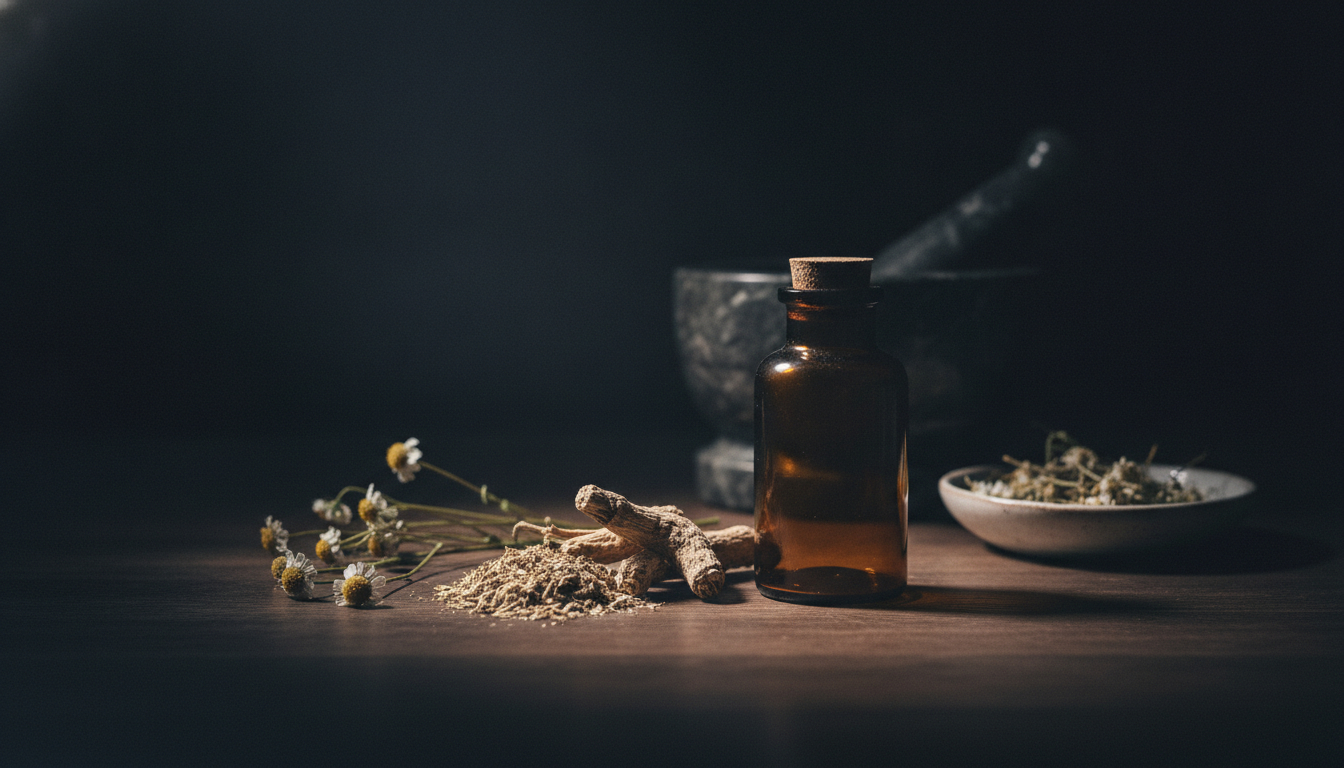
Valerian is the most popular herbal sleep aid, but the trial evidence is mixed and the study quality is uneven. What valerian is thought to do at the GABA system, the dose the trials used, why results are inconsistent, and how it compares with melatonin and magnesium.
What valerian is and why it is the default herbal sleep aid
Valerian (Valeriana officinalis) is a flowering plant whose root has been used as a sleep and anxiety remedy for centuries, and it remains the best-known herbal sleep aid, sold as capsules, teas, and tinctures. Its popularity is not the same as strong evidence, though: valerian is the default partly through tradition and availability rather than because the trials are conclusive. The root contains a complex mix of compounds, including valerenic acid and various valepotriates, and no single one has been pinned down as the definitive active ingredient. That matters practically, because it means products are not standardized to one measurable active compound, so potency varies between brands and even batches. Understanding valerian well means holding two things at once: it is plausible and widely used, and its evidence base is genuinely weak.
The proposed mechanism: nudging the GABA system
The leading hypothesis is that valerian acts on the GABA system, the brain's main inhibitory, calming pathway, which is also where benzodiazepines and alcohol act, though far more weakly. Valerenic acid appears to modulate GABA-A receptors and may slow the breakdown of GABA, which would produce a mild sedative or anxiolytic effect. This is a plausible route and fits valerian's traditional use for both sleep and nervousness. The important caveat is that most of this mechanistic work is preclinical, in cells and animals, and a plausible mechanism does not guarantee a clinically meaningful effect in people at the doses in a capsule. So the GABA story explains why valerian might work and why it is grouped with calming agents, without proving that it reliably does.
What the trials show, and why the results conflict
The honest summary is that valerian's evidence is mixed and the study quality is poor. Bent et al. 2006 (Am J Med) pooled the randomized trials and found that valerian might improve subjective sleep quality, but flagged high heterogeneity between studies and significant methodological weaknesses, meaning the positive signal was unreliable. Fernandez-San-Martin et al. 2010 (Sleep Med) reached a similar place: a hint of subjective benefit undercut by weak trial design. Some individual trials show a modest effect, others show nothing beyond placebo, and the placebo effect in sleep studies is large. The pattern, small inconsistent effects on top of low-quality trials, is exactly what you would expect from either a genuinely mild agent or a placebo, and the current evidence cannot cleanly separate the two.
How it was dosed, and the slow-onset caveat
Where valerian was tested, the typical dose was roughly 300-600 mg of a root extract taken 30 minutes to two hours before bed. A recurring observation is that valerian's effect, where present, may build over days to weeks of nightly use rather than appearing on the first night, which is why several trials dosed it continuously for two or more weeks. This has two consequences. First, judging valerian on a single night is likely to mislead, so a fair test runs at least two weeks. Second, the gradual onset makes it a poor choice for occasional acute use the night before an early flight, where a timing tool like melatonin is better matched. If you trial valerian, use a standardized extract, keep the dose and timing consistent, and give it a couple of weeks before deciding.
Safety, interactions, and product variability
Valerian is generally regarded as well tolerated in the short term, with the most common complaints being mild: daytime grogginess, headache, or, paradoxically, mild stimulation and restlessness in a minority. The more important cautions are interactions and quality. Because valerian may act on the same calming pathways as sedatives, it should not be combined with alcohol, benzodiazepines, or other sedating drugs without medical advice, and it is generally avoided in pregnancy and breastfeeding for lack of data. Long-term safety is not well characterized. And because extracts are not standardized to a single active compound, potency varies widely between products, so two bottles labeled the same dose can differ in strength. Buying from a reputable brand matters more here than for a well-standardized supplement.
Valerian versus melatonin and magnesium
It helps to place valerian against the other common non-prescription options. Melatonin is a circadian timing signal, best at a low dose at the right hour and most useful for mistimed sleep such as jet lag or delayed sleep phase, as covered in the melatonin dosing guide; it is not primarily a sedative. Magnesium glycinate has modest evidence for sleep quality and onset and a clearer safety and dosing profile, detailed in the magnesium glycinate protocol. Valerian sits apart as a putative mild sedative or anxiolytic with the weakest and most inconsistent evidence of the three. A reasonable order for someone self-experimenting is to get the fundamentals right first, then consider melatonin if the problem is timing or magnesium if the problem is quality, and treat valerian as a lower-confidence option to trial if those do not help. This article is educational and not medical advice.
Questions logged on this protocol
Does valerian root actually work for sleep?
The evidence is mixed and weak. The meta-analysis by Bent et al. 2006 found valerian might improve subjective sleep quality but flagged high variability between studies and poor methodology, so the positive signal is unreliable; Fernandez-San-Martin et al. 2010 reached a similar cautious conclusion. Some trials show a small effect, others show nothing beyond placebo, and the placebo effect in sleep is large. Valerian is best seen as a low-confidence, possibly mild option, not a reliable sleep aid, and certainly not a treatment for significant insomnia, for which cognitive behavioral therapy has far stronger evidence.
How does valerian work?
The leading hypothesis is that valerian nudges the GABA system, the brain's main calming pathway, where valerenic acid appears to modulate GABA-A receptors and may slow GABA breakdown, producing a mild sedative or anxiolytic effect. This is the same broad system where benzodiazepines and alcohol act, though valerian is far weaker. The caveat is that most of this mechanistic evidence is preclinical, from cells and animals, and a plausible mechanism does not guarantee a meaningful clinical effect at the doses in a capsule, which is consistent with the inconsistent trial results.
How much valerian should I take and when?
Trials typically used about 300-600 mg of a valerian root extract taken 30 minutes to two hours before bed. A key point is that the effect, where it exists, may build over days to weeks of nightly use rather than appearing the first night, so several studies dosed it continuously for two or more weeks. Judge it over at least two weeks rather than one night, use a standardized extract, and keep the dose and timing consistent. Because it acts slowly, valerian is a poor choice for one-off acute use, where melatonin is a better-matched tool.
Is valerian safe, and does it interact with anything?
Short-term use is generally well tolerated, with mild side effects like daytime grogginess, headache, or occasionally paradoxical restlessness. The more important cautions are interactions and quality: because valerian may act on the same calming pathways as sedatives, avoid combining it with alcohol, benzodiazepines, or other sedating drugs without medical advice, and it is generally avoided in pregnancy and breastfeeding for lack of data. Long-term safety is not well characterized. Products also vary in potency because extracts are not standardized to one active compound, so buy from a reputable brand.
Is valerian better than melatonin for sleep?
They are different tools. Melatonin is a circadian timing signal, best at a low dose at the right hour and most useful for mistimed sleep such as jet lag or delayed sleep phase, as covered in the melatonin dosing guide, rather than a sedative. Valerian is a putative mild sedative or anxiolytic with weaker, more inconsistent evidence. If your problem is timing, melatonin is the better match; magnesium glycinate is another modestly evidenced option for sleep quality. Valerian is reasonable to trial as a lower-confidence choice if the fundamentals and those options have not helped, but it should not be the first thing you reach for.
- [01]
- [02]
- [03]
- [04]
Other stacks in this hub
The Best Time to Exercise for Sleep: Why Evening Workouts Are Mostly Fine
Regular exercise is one of the most reliable ways to sleep better, and the old warning to avoid evening workouts has largely not held up. What the research says about how exercise improves sleep, whether the time of day matters, and the one narrow exception, vigorous exercise finished right before bed, that can genuinely delay sleep onset.
How Long Does Melatonin Last? Onset, Duration, and Why Timing Beats Dose
Melatonin does not work like a sleeping pill, and its short pharmacokinetics explain why. What the research says about how fast it kicks in, how long it stays in your system, why a big dose does not last longer in a useful way, and why when you take it matters far more than how much.
The Best Sleeping Position: What the Evidence Says and Why It Depends on You
There is no single best position for everyone, but the evidence does favor some positions for specific problems. What the research says about side, back, and stomach sleeping for snoring and apnea, reflux, back and neck pain, and pregnancy, and why comfort and the position you actually stay in matter more than chasing an ideal you cannot hold.