Staying up late scrolling when you are tired and want to sleep is revenge bedtime procrastination: sacrificing sleep to reclaim personal time a busy day took. What the research calls it, why late chronotypes and low-autonomy days make it worse, and the behavioral levers that actually shorten the delay.
What revenge bedtime procrastination actually is
The term is a translation of a Chinese social-media phrase (bàofùxìng áoyè) that Kroese and colleagues studied academically as bedtime procrastination: going to bed later than intended without any external reason to do so (Kroese et al. 2014, Front Psychol). The 'revenge' framing adds the motive most people recognize, reclaiming leisure time that a packed day swallowed, so the late hours feel earned rather than wasted. It is not insomnia: you could sleep, but you choose the phone, the show, or the scroll instead. That distinction matters because the fix is behavioral, not a sleep-onset problem. If you genuinely cannot fall asleep once the lights are off, that is a different issue covered in the guide on falling asleep faster.
Why it happens: depleted self-control, not a character flaw
Kroese's work links bedtime procrastination to self-regulation: the same trait that predicts procrastination during the day predicts it at night, and self-control is lowest in the evening after a day of decisions and demands (Kroese et al. 2016, J Health Psychol). The mechanism is not laziness but depletion, the willpower that would enforce a bedtime is spent. Layer on the autonomy motive, people with little control over their daytime hours defend the night as the only time that is theirs, and the delay becomes a rational-feeling trade. Understanding it as a self-regulation failure under load, rather than a personal defect, points at the real levers: reduce the number of bedtime decisions and lower the friction of stopping.
The chronotype trap: late types fight their own clock
Bedtime procrastination is worse for evening chronotypes, whose internal clock does not signal sleepiness until later, so the window between 'tired enough to sleep' and 'wired and scrolling' is wide and easy to fall into (a late chronotype's melatonin onset can run one to three hours behind an early type's). If your late nights are partly your biology rather than pure procrastination, the highest-yield move is not more willpower but shifting the clock earlier with morning light and a consistent wake time, which is the phase-advance mechanism covered in the morning sunlight protocol. Fighting a delayed clock with discipline alone tends to fail; move the clock first, then the intended bedtime becomes reachable.
Set a wind-down alarm, not a bedtime
A bedtime is the moment you are already too invested in the current episode or feed to stop. A wind-down alarm set 30-45 minutes earlier interrupts before the sunk-cost trap closes, converting one hard decision at midnight into a scheduled cue you rehearse nightly. Pair it with a fixed wake time held seven days a week: the wake anchor builds sleep pressure and, with morning light, keeps the clock stable, so the body starts signaling sleepiness closer to the bedtime you want. This is the same fixed-wake-time backbone that stabilizes sleep in the stay-asleep protocol, applied here to defend the front of the night rather than the middle.
Cut the friction, not the pleasure
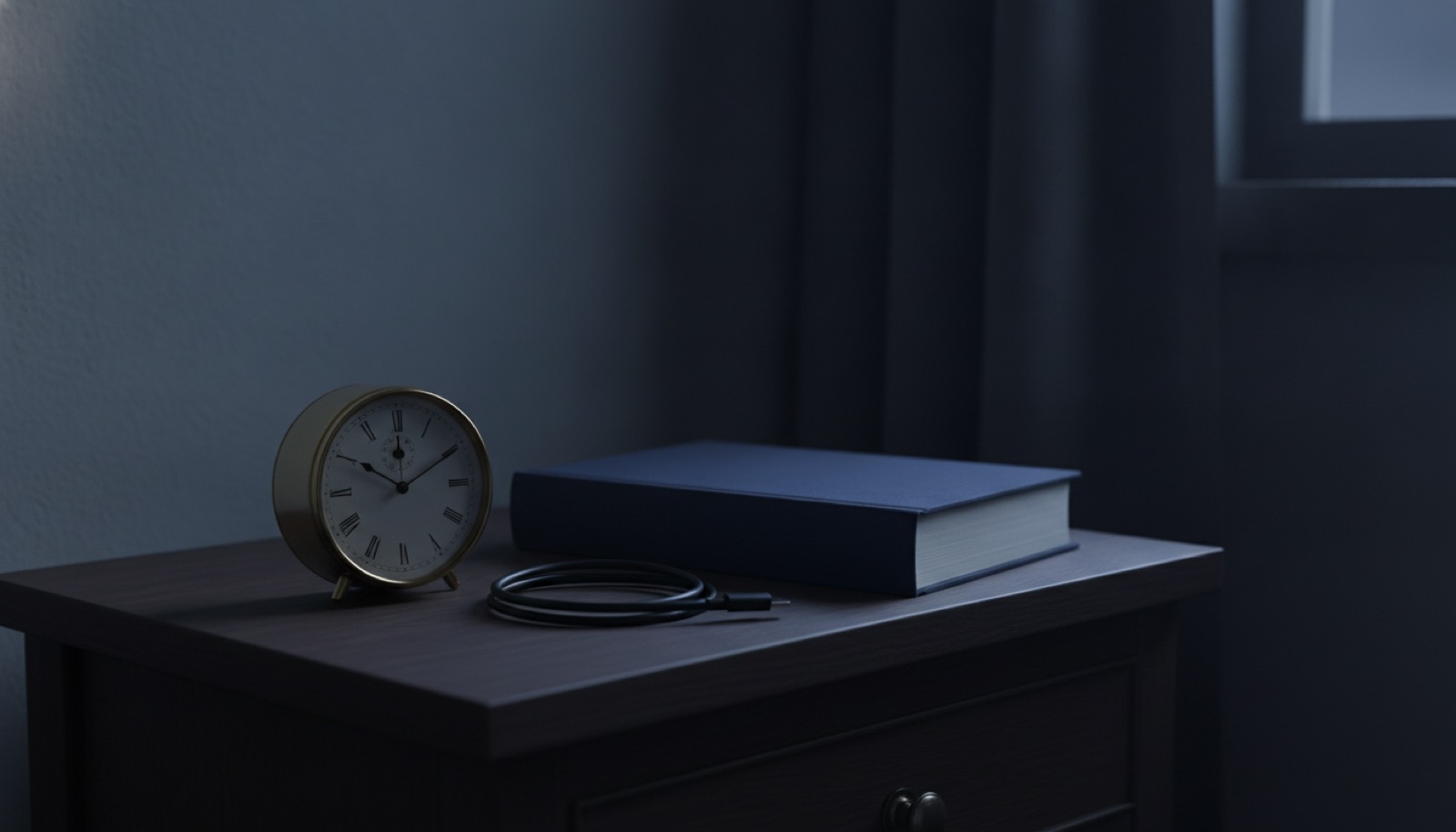
Because the failure is a depleted-willpower failure, the durable fix is to make stopping easy rather than to rely on resolve. Charge the phone outside the bedroom so retrieving it is a deliberate act; use an old-fashioned alarm clock so the phone is not your wake device and never enters the bed. Move the last block of leisure earlier and out of bed, so the reclaimed personal time happens on the sofa at 9pm rather than under the covers at midnight, which protects both the autonomy motive and the bed-equals-sleep association that stimulus control depends on. Grayscale mode and app timers help at the margin, but environment beats intention: the phone that is not in the room cannot steal the hour.
Address the daytime cause, or the night will keep taking its revenge
The 'revenge' motive is a signal that daytime leisure is genuinely too scarce, and no bedtime tactic survives a life with zero personal time. Building even 20-30 minutes of protected, phone-free leisure into daylight hours removes the pressure that the night was compensating for, which is often what makes the wind-down alarm actually work rather than get snoozed. Chronic sleep loss from repeated late nights accumulates as a real debt with next-day performance costs, so the trade is worse than it feels in the moment; see the guide on sleep debt for how that math compounds. This article is educational and not medical advice.
Questions logged on this protocol
What is revenge bedtime procrastination?
It is staying up later than you intended, with no external reason to, in order to reclaim personal or leisure time that a busy day used up. Academically it is called bedtime procrastination (Kroese et al. 2014); the 'revenge' framing names the motive, defending the only hours that feel like your own. It is a behavioral choice rather than an inability to sleep, which is why the fixes are about decisions and environment, not sleep aids.
Why do I keep procrastinating going to bed even when I'm tired?
Self-control is a depletable resource and it is lowest in the evening after a day of demands, so the willpower to enforce a bedtime is largely spent by night (Kroese et al. 2016). If you also have little autonomy during the day, the night becomes the only time that is yours, which makes staying up feel like a fair trade rather than a mistake. Late chronotypes have it hardest, because the clock does not signal sleepiness until later.
How do I stop revenge bedtime procrastination?
Set a wind-down alarm 30-45 minutes before your target bedtime so you interrupt before you are too invested to stop, hold a fixed wake time seven days a week to stabilize the clock, and remove friction by charging the phone outside the bedroom and using a separate alarm clock. Move your reclaimed leisure earlier and out of bed. Because the driver is depleted willpower, changing the environment works better than resolving to try harder.
Is revenge bedtime procrastination the same as insomnia?
No. With bedtime procrastination you could fall asleep but choose to stay up instead; with insomnia you get into bed intending to sleep and cannot. The fix differs: procrastination responds to earlier cues and a lower-friction environment, while persistent trouble falling or staying asleep points to sleep-onset or sleep-maintenance issues. If you delay going to bed and then also cannot fall asleep once you do, see the guides on falling asleep faster and on staying asleep.
Does my chronotype make it worse?
Yes. Evening chronotypes have a clock that delays the sleepiness signal, widening the window in which you are awake enough to keep scrolling but should be asleep. If biology is part of the problem, shifting the clock earlier with a fixed wake time and morning light is more effective than willpower alone; a delayed clock resists discipline. Move the clock first with the morning sunlight protocol, then the intended bedtime becomes something your body actually supports.
- [01]
- [02]
- [03]
- [04]
Other stacks in this hub
How to Improve REM Sleep: What Actually Raises It and What Just Wrecks It
You cannot force REM sleep directly, but several everyday habits quietly suppress it, and removing them is how you get more. What the research says about when REM happens across the night, why alcohol and short sleep cut it most, and why the single biggest lever is simply giving yourself enough time asleep in the early morning hours.
Is 7 Hours of Sleep Enough? What the Evidence Actually Says
Seven hours is the number most sleep authorities put at the bottom of the healthy adult range, which makes it enough for many people and too little for some. What the large studies and the official recommendations say about the 7-hour mark, why sleep need varies between people, and the honest signs that tell you whether your own 7 hours is sufficient or short.
How Much Sleep Do Women Need? Separating the Evidence From the Myth
A popular claim says women need more sleep than men. The recommended ranges are actually the same for both, but there are real, evidence-based reasons a woman's sleep can differ across the menstrual cycle, pregnancy, and menopause. What the guidelines say, what the sex-difference research does and does not show, and how life stage changes the picture.