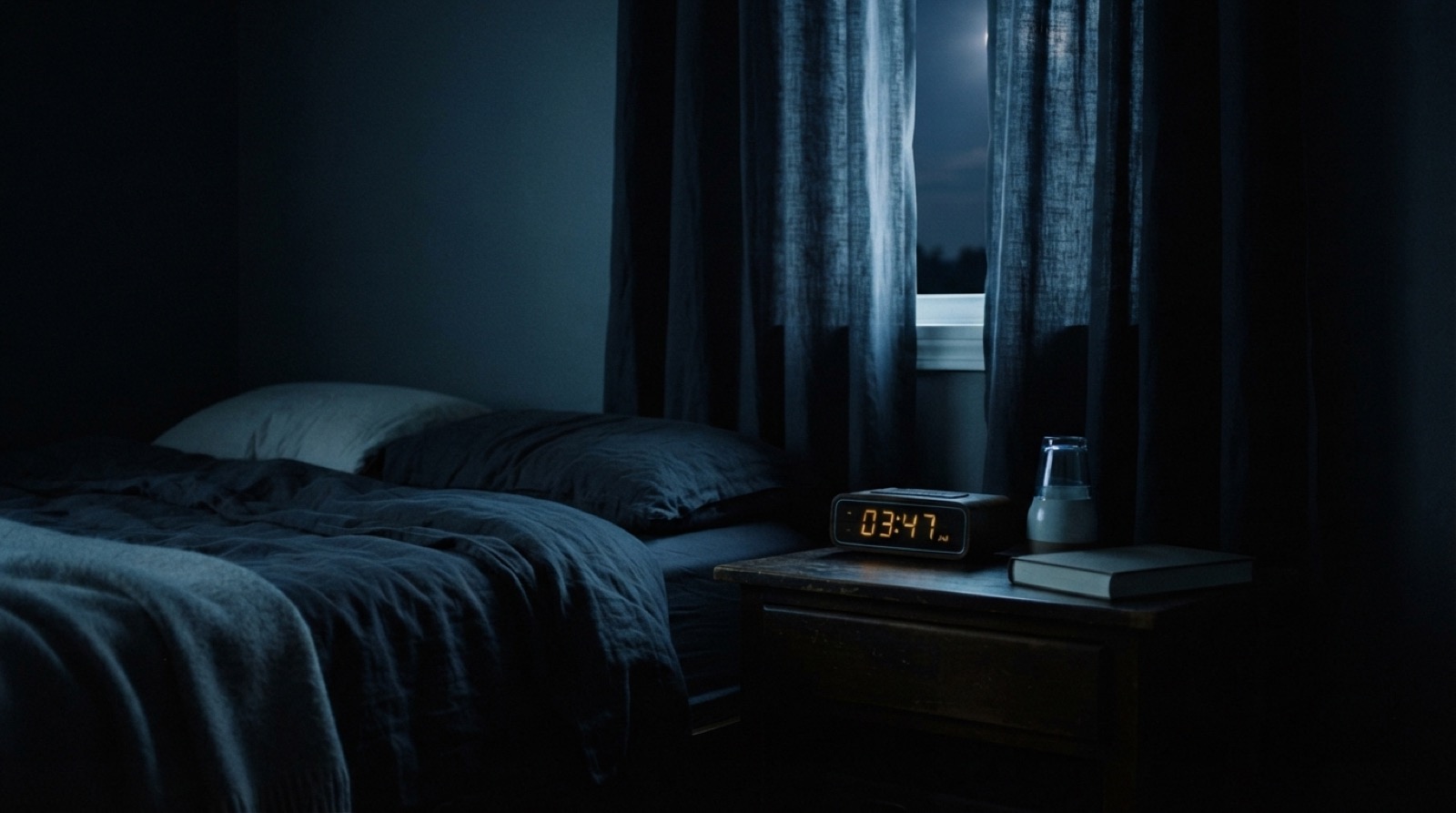
The cortisol awakening response, the two-process model, and the actual causes of mid-sleep awakening, with the protocols.
Questions logged on this protocol
Is waking at 3am normal?
Brief awakenings are universal. Polysomnography studies (Bonnet & Arand 2003, Sleep Med Rev) show most adults experience 10-15 micro-awakenings per night, most unremembered. The 3am awakening becomes a problem when you stay awake for 20+ minutes, do it 3+ nights per week, or the pattern persists 3+ months; that last threshold is the DSM-5 insomnia criterion (Morin et al. 2015).
What does cortisol have to do with it?
Cortisol has a diurnal rhythm that begins rising roughly 2-3 hours before habitual wake; this is the cortisol awakening response (Clow et al. 2010, Int J Psychophysiol). For a 06:00 waker, that rise begins around 03:00-04:00. In healthy sleep, you sleep through it. Elevated stress or disrupted HPA axis function can amplify the rise enough to cross the awakening threshold, producing the classic 3am wake-up.
Why does alcohol in the evening cause it?
Alcohol shortens sleep onset but fragments the second half of the night. As blood alcohol clears (typically 3-5 hours after drinking), rebound sympathetic activation raises heart rate and core temperature, often triggering awakening in the 02:00-04:00 window (Ebrahim et al. 2013, Alcohol Clin Exp Res). Two drinks at 20:00 frequently produce a 03:00 wake. The pattern is mechanistic, not anecdotal.
Does blood sugar matter?
Plausibly, in a minority of cases. Nocturnal hypoglycemia can trigger counter-regulatory cortisol and adrenaline release, which would produce awakening. CGM data in healthy adults (Zeevi et al. 2015, Cell) shows most do not dip to symptomatic glucose levels overnight. For diabetics or those on glucose-lowering agents, the risk is real and should be discussed with a clinician. For most readers, blood sugar is not the primary driver, cortisol and alcohol clearance are more common.
When should I get out of bed?
CBT-I protocols (Edinger & Means 2005, Clin Psychol Rev) recommend leaving the bed after ~20 minutes of unsuccessful re-sleep. Go to a dim, cool room, read paper under low warm light (<50 lux), return to bed only when sleepy. Staying in bed awake for an hour conditions the brain to associate the bed with wakefulness; that conditioned association is the core maintenance mechanism of chronic insomnia.
Is melatonin useful for 3am wake-ups?
Generally no. Melatonin shortens sleep onset but has minimal effect on sleep maintenance at physiological doses. For sleep-maintenance insomnia, the evidence base supports CBT-I as first-line (Qaseem et al. 2016, Ann Intern Med). If the 3am pattern persists 4+ weeks and is affecting daytime function, a sleep physician evaluation is more useful than dose-stacking melatonin.
- [01]
- [02]
- [03]
- [04]
- [05]
Other stacks in this hub
How to Improve REM Sleep: What Actually Raises It and What Just Wrecks It
You cannot force REM sleep directly, but several everyday habits quietly suppress it, and removing them is how you get more. What the research says about when REM happens across the night, why alcohol and short sleep cut it most, and why the single biggest lever is simply giving yourself enough time asleep in the early morning hours.
Is 7 Hours of Sleep Enough? What the Evidence Actually Says
Seven hours is the number most sleep authorities put at the bottom of the healthy adult range, which makes it enough for many people and too little for some. What the large studies and the official recommendations say about the 7-hour mark, why sleep need varies between people, and the honest signs that tell you whether your own 7 hours is sufficient or short.
How Much Sleep Do Women Need? Separating the Evidence From the Myth
A popular claim says women need more sleep than men. The recommended ranges are actually the same for both, but there are real, evidence-based reasons a woman's sleep can differ across the menstrual cycle, pregnancy, and menopause. What the guidelines say, what the sex-difference research does and does not show, and how life stage changes the picture.