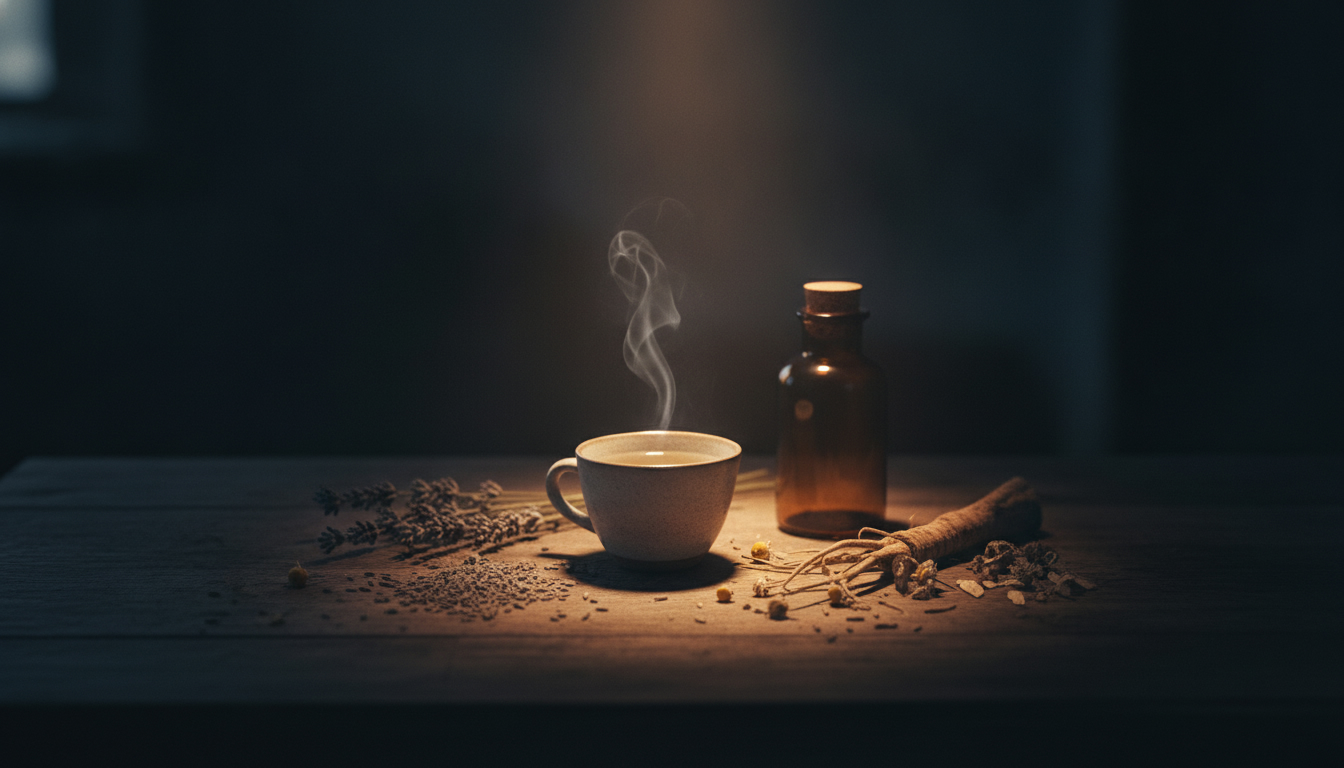
A ranked, evidence-first look at the plant-based sleep aids people actually try: valerian, lavender, chamomile, passionflower, hops, and lemon balm. What the trials found, the doses they used, and where the evidence runs thin.
Lavender (oral Silexan): the strongest herbal evidence, but for anxiety
Lavender has the most convincing trial data on this list, though the mechanism is indirect: it works mainly by reducing anxiety, which in turn helps sleep. A standardized oral lavender oil preparation (silexan, 80 mg) has been tested in several randomized controlled trials for generalized anxiety, where Kasper et al. 2014 (Int J Neuropsychopharmacol) found it comparable to a low dose of an anxiolytic drug, with improved sleep as a secondary benefit. Reviews of lavender for sleep specifically (Fismer & Pilkington 2012) are more cautious, noting small studies and mixed methods. The practical read: if racing, anxious thoughts are what keep you awake, standardized oral lavender is the herbal option with real evidence behind it, whereas lavender aromatherapy alone has softer support.
Valerian (Baldrian): the most popular, with genuinely mixed results
Valerian is the best-known herbal sleep aid and the one most people try first, but the evidence is frustratingly inconsistent. It is thought to act on the GABA system, the same inhibitory pathway that sedative drugs target, which gives it a plausible mechanism. A widely cited systematic review, Bent et al. 2006 (Am J Med), pooled 16 studies and concluded valerian might improve subjective sleep quality but that the trials were of poor methodological quality and results were not consistent, with little effect on objectively measured sleep. Later meta-analyses reached similar hedged conclusions. Typical study doses were 300 to 600 mg of extract 30 to 120 minutes before bed. Valerian is low-risk to trial, but temper expectations: it is closer to a mild, unreliable nudge than a dependable sedative, and it is not a substitute for the melatonin timing covered in our melatonin dosing guide when the real problem is a mistimed clock.
Passionflower (Passiflora): small trials, gentle signal
Passionflower is another GABA-linked herb with a small but real evidence base. A frequently cited pilot, Ngan & Conduit 2011 (Phytother Res), gave healthy adults passionflower tea for a week and found a modest improvement in subjective sleep quality versus placebo, and it is often combined with valerian or lemon balm in commercial blends. The trials are small and the effect is gentle, so passionflower belongs in the same category as valerian: a low-risk herbal option that may take the edge off mild sleeplessness for some people, without strong or consistent objective sleep data behind it. It is usually taken as a tea or a standardized extract in the evening.
Chamomile (Kamille): soothing ritual, thin objective data
Chamomile is the classic bedtime tea, and its proposed active compound, apigenin, does bind benzodiazepine receptors in the brain, which is the usual mechanistic story. The human sleep data, however, is thin. Zick et al. 2011 (BMC Complement Altern Med), a small randomized trial of chamomile extract in adults with insomnia, found no statistically significant improvement in objective sleep, though it was well tolerated. A later trial in postpartum women reported some short-term benefit. The honest summary is that chamomile is a pleasant, safe, low-risk evening ritual whose calming effect may owe as much to the warm-drink wind-down as to the herb itself, and it should not be relied on to treat real insomnia.
Hops (Hopfen): rarely studied alone, usually paired with valerian
Hops, the same flower used to bitter beer, contains sedative compounds and is a traditional sleep herb, but it is almost never tested on its own. Most of its evidence comes from valerian-hops combination products, where trials such as those reviewed alongside valerian suggest the combination may modestly improve sleep, making it hard to separate the hops contribution from valerian's. On its own the data is sparse. Hops is reasonable as part of a combination herbal blend rather than a standalone bet, and it is worth noting the sleep-fragmenting effect of the alcohol in beer far outweighs any sedative benefit from the hops, so beer is not a sleep aid.
Lemon balm (Melisse): mild anxiolytic, often in blends
Lemon balm is a mint-family herb used traditionally for restlessness and often combined with valerian or passionflower. Its evidence leans toward anxiety and stress rather than sleep directly: Cases et al. 2011 (Med J Nutrition Metab) reported reduced anxiety and insomnia symptoms with a lemon balm extract in a small open-label study, and it appears in several combination-product trials. As with the other calming herbs, the signal is gentle and the standalone data is limited, so lemon balm is best viewed as a mild, low-risk component of an evening routine rather than a proven sleep treatment.
How to trial an herbal sleep aid, and when to skip it
If you want to test any of these, a few rules keep it sensible. Pick one herb at a time so you can tell what, if anything, is working, use a standardized extract at the studied dose, and give it one to two weeks rather than judging a single night. Herbal does not mean risk-free: valerian and other sedative herbs can add to the effect of alcohol, benzodiazepines, and other sedatives, some interact with medications, and pregnancy, breastfeeding, and liver conditions are reasons to check with a clinician first. Most importantly, no herb fixes a mistimed clock, evening screen light, or a caffeine habit, so fix the fundamentals covered in our sleep hygiene protocol before reaching for a supplement. If sleeplessness is chronic, the strongest evidence points to cognitive behavioral therapy for insomnia rather than any herb. This article is educational and not medical advice.
Questions logged on this protocol
What is the most effective herbal sleep aid?
By trial quality, standardized oral lavender (silexan) has the strongest evidence, but mainly because it reduces anxiety, which then improves sleep (Kasper et al. 2014). Valerian is the most popular and the most studied specifically for sleep, yet the results are inconsistent and mostly limited to modest improvements in subjective sleep quality (Bent et al. 2006). The rest, passionflower, chamomile, hops, and lemon balm, have gentler and thinner evidence. There is no herbal option with the reliability of a sedative drug, so the realistic expectation is a mild nudge that helps some people, not a dependable knockout.
Does valerian root actually work for sleep?
Sometimes, modestly, and not reliably. Valerian is thought to act on the GABA system, and the systematic review by Bent et al. 2006 found it may improve subjective sleep quality but with poor-quality trials and little effect on objectively measured sleep. Typical doses in studies were 300 to 600 mg of extract taken 30 to 120 minutes before bed. It is low-risk to trial for a week or two, but it is closer to a gentle, unreliable aid than a strong sedative, and it will not correct a sleep problem that is really about timing, light, or caffeine.
Are herbal sleep aids safe?
For most healthy adults the popular ones are low-risk when used at studied doses, but herbal does not mean harmless. Sedative herbs like valerian and hops can add to the effects of alcohol, benzodiazepines, and other sedatives, and some herbs interact with medications. Pregnancy, breastfeeding, liver conditions, and upcoming surgery are all reasons to check with a clinician first. Trial one herb at a time so you can attribute any effect or side effect, use a standardized product, and stop if you notice daytime grogginess or any reaction.
Is chamomile tea a real sleep aid or just a ritual?
Mostly a soothing ritual with thin objective support. Chamomile's proposed active compound, apigenin, binds benzodiazepine receptors, which gives a plausible mechanism, but the human data is weak: a randomized trial in adults with insomnia (Zick et al. 2011) found no significant improvement in objective sleep, though chamomile was well tolerated. That does not make it useless, because a warm, caffeine-free wind-down drink can genuinely help you downshift before bed, but the benefit likely owes as much to the routine as to the herb. Enjoy it as part of an evening routine, not as a treatment.
Should I use an herbal sleep aid or melatonin?
They solve different problems. Melatonin is a timing signal, most useful for jet lag, delayed sleep phase, and shift work at a low physiological dose at the right hour, as covered in our melatonin dosing guide. Herbal aids like valerian and lavender are calming agents that may lower the arousal that keeps you awake, but they do not shift the clock. If your issue is a mistimed schedule, melatonin plus morning light is the sharper tool. If it is bedtime tension, a calming herb such as standardized lavender is reasonable to trial. Neither replaces a consistent wake time, morning light, and a cool, dark room.
How long should I try an herbal sleep aid before deciding?
Give it one to two weeks at the studied dose rather than judging by a single night, since several of these herbs show their (modest) effects cumulatively and night-to-night sleep is noisy. Trial one herb at a time using a standardized extract, keep the rest of your routine steady so you are not changing several things at once, and track how you sleep. If there is no clear benefit after two weeks, it is unlikely to be your answer, and persistent insomnia is better addressed with cognitive behavioral therapy for insomnia, which has far stronger evidence than any herb.
- [01]
- [02]
- [03]
- [04]
- [05]
Other stacks in this hub
The Best Time to Exercise for Sleep: Why Evening Workouts Are Mostly Fine
Regular exercise is one of the most reliable ways to sleep better, and the old warning to avoid evening workouts has largely not held up. What the research says about how exercise improves sleep, whether the time of day matters, and the one narrow exception, vigorous exercise finished right before bed, that can genuinely delay sleep onset.
How Long Does Melatonin Last? Onset, Duration, and Why Timing Beats Dose
Melatonin does not work like a sleeping pill, and its short pharmacokinetics explain why. What the research says about how fast it kicks in, how long it stays in your system, why a big dose does not last longer in a useful way, and why when you take it matters far more than how much.
The Best Sleeping Position: What the Evidence Says and Why It Depends on You
There is no single best position for everyone, but the evidence does favor some positions for specific problems. What the research says about side, back, and stomach sleeping for snoring and apnea, reflux, back and neck pain, and pregnancy, and why comfort and the position you actually stay in matter more than chasing an ideal you cannot hold.