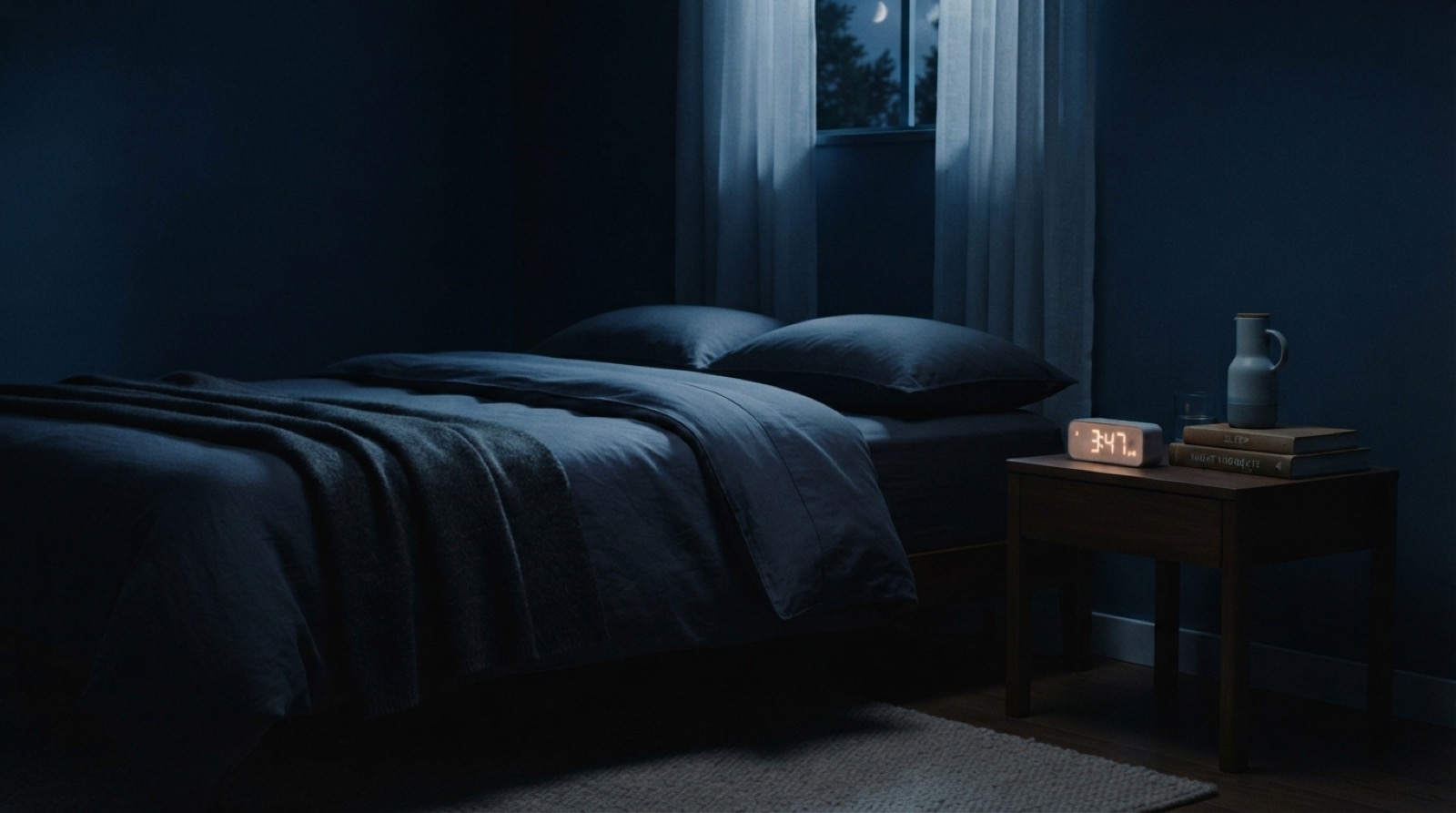
Waking and not getting back to sleep is sleep-maintenance insomnia, a different problem from trouble falling asleep. The likely causes, the light and temperature levers, the role of fixed wake time, and where low-dose magnesium fits.
Staying asleep is a different problem from falling asleep
Sleep-onset insomnia (trouble falling asleep) and sleep-maintenance insomnia (waking in the night and struggling to return) have different drivers and different fixes. A brief awakening between sleep cycles is normal: a healthy adult surfaces toward light sleep several times a night and usually does not remember it. The problem is not the waking itself but failing to fall back asleep. If your difficulty is at the start of the night instead, see the guide on falling asleep faster; this protocol is for the 3am-wide-awake pattern.
Why you wake in the second half of the night
Sleep architecture shifts across the night: deep sleep (N3) front-loads the first third and the later cycles are lighter, dominated by N2 and REM, so awakenings cluster after the first few hours when the bed and body are easier to rouse. Common amplifiers are evening alcohol, which fragments the second half of the night and causes rebound arousals (Ebrahim et al. 2013), an overheated room that blocks the core-temperature drop sleep maintenance depends on (Krauchi et al. 2000), a too-late or irregular bedtime, and a bladder loaded by late fluids. For the specific 3am-cortisol pattern see the dedicated guide on why you wake at 3am.
Anchor the clock: fixed wake time plus morning light
The most reliable structural fix for fragmented sleep is a fixed wake time held seven days a week, followed by 10-30 minutes of bright light within 60 minutes of waking. Morning light phase-anchors the suprachiasmatic clock (Khalsa et al. 2003), which consolidates the timing of the whole night and reduces drift toward the early waking that comes from a delayed or unstable rhythm. Outdoor daylight delivers 10,000-100,000 lux; a 10,000 lux lamp substitutes before sunrise. This is the same dose as the morning sunlight protocol, applied to stabilize sleep rather than to shift it.
Cool, dark, and alcohol-free: the environment levers
Sleep maintenance depends on the core body temperature staying low through the night, mediated by heat loss through the skin (Krauchi et al. 2000), so a bedroom around 18 C and breathable bedding reduce temperature-driven awakenings. Keep the room dark, since light leaking onto the retina in the second half of the night can nudge the clock and lighten sleep. The single highest-yield removal is evening alcohol: it speeds onset but reliably fragments the back half of the night, so even a couple of drinks can be the cause of a 3am waking. Finish caffeine 8-10 hours before bed and front-load fluids earlier in the day.
What to do when you are awake at 3am (stimulus control)
If you wake and are still awake after about 20 minutes, the evidence-based move is stimulus control (Bootzin), the core of CBT-I: leave the bed and do something dull in dim light until you feel sleepy, then return. Lying in bed awake, willing sleep to come, trains the brain to associate the bed with wakefulness and frustration, which deepens the problem. Do not check the clock, since clock-watching raises arousal and feeds anxious arithmetic about lost sleep. Keep lights dim and screens off so you do not give the clock a morning signal. CBT-I, not medication, is the first-line treatment for chronic insomnia.
Where supplements fit (and where they do not)
Supplements are a minor lever next to timing, temperature, and alcohol, not a fix on their own. Magnesium glycinate at the labeled elemental dose in the evening has modest, mixed evidence for sleep quality and is reasonable to try; see the magnesium for sleep guide for what the data actually support and the right form and dose. Melatonin is a timing signal rather than a sedative and is more useful for a delayed clock than for mid-night waking; if used, keep it to 0.3-0.5 mg, since higher retail doses oversedate without helping maintenance (see the melatonin dosing guide). Evidence that any supplement specifically reduces sleep-maintenance awakenings in healthy adults is limited. This article is educational and not medical advice.
Questions logged on this protocol
Why do I keep waking up in the middle of the night?
Brief awakenings between sleep cycles are normal, and the later cycles of the night are lighter (more N2 and REM, less deep sleep), so you rouse more easily after the first few hours. Common amplifiers are evening alcohol, which fragments the second half of the night, an overheated bedroom, a late or irregular bedtime, late fluids, and stress-driven arousal. Persistent early-morning waking with low mood can signal depression, and loud snoring with pauses points to sleep apnea, both of which need a clinical assessment rather than a behavioral fix.
How do I stay asleep all night?
Anchor a fixed wake time seven days a week with morning light, keep the bedroom cool (~18 C) and dark, cut evening alcohol and late caffeine, and front-load fluids earlier in the day. If you wake and are still awake after about 20 minutes, get out of bed and do something dull in dim light until sleepy rather than lying there (stimulus control). A single brief waking per night is normal; the goal is returning to sleep quickly, not eliminating every awakening. This article is educational and not medical advice.
Should I get out of bed if I can't fall back asleep?
Yes, if you have been awake roughly 20 minutes or more. This is stimulus control, the core of CBT-I (Bootzin): lying in bed awake trains the brain to associate the bed with wakefulness, which worsens insomnia over time. Leave the bed, keep the lights dim and screens off, do something monotonous, and return when you feel sleepy. Avoid checking the clock, since it raises arousal. Over a few weeks this rebuilds the bed-equals-sleep association and shortens night-time wakings.
Does alcohol make you wake up at night?
Yes. Alcohol speeds sleep onset but reliably fragments the second half of the night, with rebound arousals and lighter sleep as it is metabolized (Ebrahim et al. 2013). Even one or two evening drinks can be the cause of a consistent 3am waking. It is one of the highest-yield things to remove for anyone whose sleep continuity is poor. Cutting evening alcohol, alongside a cool dark room and a fixed wake time, addresses the most common reversible causes of sleep-maintenance waking.
Does magnesium help you stay asleep?
The evidence is modest and mixed, and it is about sleep quality in general rather than sleep-maintenance waking specifically. Magnesium glycinate at the labeled elemental dose in the evening is reasonable to try as a minor lever, but it will not substitute for fixing timing, temperature, and evening alcohol. See the magnesium for sleep guide for the form and dose the data support. If waking persists despite addressing the behavioral causes, a clinical evaluation is the right next step. This article is educational and not medical advice.
- [01]
- [02]
- [03]
- [04]
Other stacks in this hub
How to Improve REM Sleep: What Actually Raises It and What Just Wrecks It
You cannot force REM sleep directly, but several everyday habits quietly suppress it, and removing them is how you get more. What the research says about when REM happens across the night, why alcohol and short sleep cut it most, and why the single biggest lever is simply giving yourself enough time asleep in the early morning hours.
Is 7 Hours of Sleep Enough? What the Evidence Actually Says
Seven hours is the number most sleep authorities put at the bottom of the healthy adult range, which makes it enough for many people and too little for some. What the large studies and the official recommendations say about the 7-hour mark, why sleep need varies between people, and the honest signs that tell you whether your own 7 hours is sufficient or short.
How Much Sleep Do Women Need? Separating the Evidence From the Myth
A popular claim says women need more sleep than men. The recommended ranges are actually the same for both, but there are real, evidence-based reasons a woman's sleep can differ across the menstrual cycle, pregnancy, and menopause. What the guidelines say, what the sex-difference research does and does not show, and how life stage changes the picture.