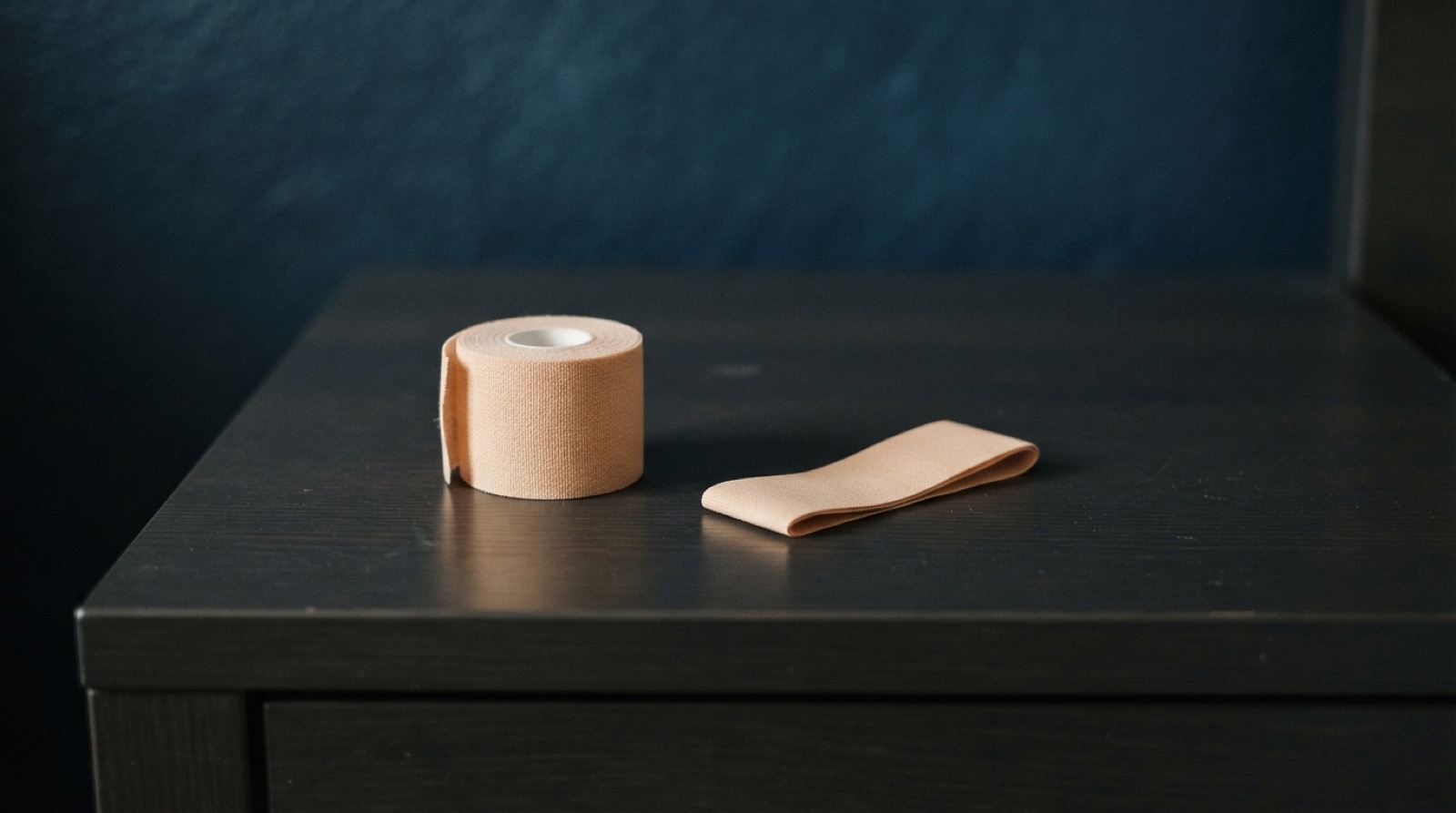
Mouth tape is the simplest nasal-breathing intervention with sleep-quality data behind it. The five tapes that survive a 7-night test, the adhesion-vs-skin-irritation tradeoff, and what the literature actually shows.
3M Micropore (the unbranded chronobiology default)
The mouth-tape category is full of branded $20 small-pack products that are paper or hypoallergenic medical tape with marketing on top. 3M Micropore, the same hypoallergenic paper tape used in clinical settings, is the underlying material in most. Buy a $4 roll, cut to 2-inch strips, get 90+ uses. The branded variants are reasonable if the cut-piece form factor matters; the underlying material is what holds.
Check price · Amazon- 01 ·Hypoallergenic medical tape
3M Micropore Surgical Tape (1-inch roll)
The default. Hypoallergenic acrylate adhesive, paper backing, breathable. Cut into 2-inch strips for vertical-application sleep use. ~$4/roll for ~90 uses. Available at any pharmacy. Irritation rate in long-term wear studies is the lowest of the medical-tape category.
Check price · Amazon - 02 ·Branded mouth tape
Hostage Tape
Pre-cut horizontal strips designed for the mouth. Stronger adhesive than Micropore, harder to remove if you wake mid-night. Survives an entire night's REM movement reliably. Higher per-use cost (~$0.40) but the form factor avoids the tape-cutting step. Skin sensitivity reactions reported in ~5–8% of long-term users.
Check price · Direct - 03 ·Branded mouth tape with central breathing hole
Somnifix
Hypoallergenic with a central perforated breathing slot, designed to allow emergency mouth-breathing if nasal passages block. The fail-safe is real but the perforation means the seal is partial, which reduces the clinical effect (mouth breathing is still possible at low resistance). Reasonable choice for first-week users who are nervous about sealing the mouth completely.
Check price · Amazon - 04 ·Branded mouth tape
Dryft
Vertical-strip form factor, mid-strength adhesive between Micropore and Hostage. Often comes in starter packs with both adhesive strengths. Cost-per-use sits between the budget Micropore and the premium Hostage. Form factor preference, not material superiority.
Check price · Amazon - 05 ·Pharmacy alternative to Micropore
Nexcare First Aid Sensitive Skin Tape
Same category as 3M Micropore, slightly stronger adhesive. Useful for users who experience mid-night detachment with Micropore. Stocked at Walgreens and CVS.
Check price · Amazon
Questions logged on this protocol
Does mouth tape actually do anything?
The published evidence is small but real. Lee et al. 2022 (Healthcare, n=20) reported reduced apnea-hypopnea index in mild OSA patients with mouth tape vs control. Huang & Sun 2015 (J Otolaryngol Head Neck Surg) reported reduced snoring intensity. The mechanism is enforced nasal breathing, which routes air past the inferior turbinates (humidification + filtering) and increases nitric oxide delivery (Lundberg & Weitzberg 1999). The effect size is modest. Mouth tape is not a treatment for moderate-to-severe sleep apnea, see a sleep physician for that.
Is mouth tape safe?
For most healthy adults, yes. Contraindications: known severe nasal obstruction (deviated septum without surgical correction, chronic sinusitis with no nasal airflow), severe acid reflux (mouth breathing helps decompress the lower esophageal sphincter in some patients), CPAP users (the CPAP mask handles the airway), young children (the gag-reflex risk profile is different). If you cannot breathe through your nose with your mouth closed for 60 seconds while awake, do not tape your mouth. Most adults pass this test trivially.
How do I know if I'm a mouth-breather while sleeping?
Three signals: (1) waking with a dry mouth or scratchy throat is the most common; (2) a partner reporting mouth-open sleeping or louder breathing; (3) high resting heart rate during sleep on Oura/Whoop without obvious cause, chronic mouth breathing through low-grade airway resistance can elevate sympathetic tone. A 7-night mouth-tape trial is itself diagnostic, if dry-mouth-on-waking goes away, you were mouth-breathing.
What if the tape falls off?
Two causes. First: skin oil. Wash and dry the lip area before applying, most failures are a lipid film between adhesive and skin. Second: facial hair. Mustache or chin-stubble interferes with the seal. Either trim the mustache, apply the tape just on the upper lip and chin, or use the stronger Hostage adhesive. If the tape repeatedly falls off in REM, you're a heavy mouth-breather and need the stronger adhesive class.
What's the difference between cheap and expensive mouth tape?
Form factor and brand premium. The underlying adhesive technology is hypoallergenic acrylate or silicone, both are commodity. Branded $20 packs are typically pre-cut shapes of materials available in roll form for a fraction of the per-use cost. The exception is Somnifix's perforated design, which has a real fail-safe rationale. Otherwise, the recommendation is: try Micropore from a pharmacy first; only escalate to branded products if cut-strip form factor or stronger adhesive is needed.
- [01]
- [02]
- [03]
- [04]
- [05]
Other stacks in this hub
The Best Time to Exercise for Sleep: Why Evening Workouts Are Mostly Fine
Regular exercise is one of the most reliable ways to sleep better, and the old warning to avoid evening workouts has largely not held up. What the research says about how exercise improves sleep, whether the time of day matters, and the one narrow exception, vigorous exercise finished right before bed, that can genuinely delay sleep onset.
How Long Does Melatonin Last? Onset, Duration, and Why Timing Beats Dose
Melatonin does not work like a sleeping pill, and its short pharmacokinetics explain why. What the research says about how fast it kicks in, how long it stays in your system, why a big dose does not last longer in a useful way, and why when you take it matters far more than how much.
The Best Sleeping Position: What the Evidence Says and Why It Depends on You
There is no single best position for everyone, but the evidence does favor some positions for specific problems. What the research says about side, back, and stomach sleeping for snoring and apnea, reflux, back and neck pain, and pregnancy, and why comfort and the position you actually stay in matter more than chasing an ideal you cannot hold.