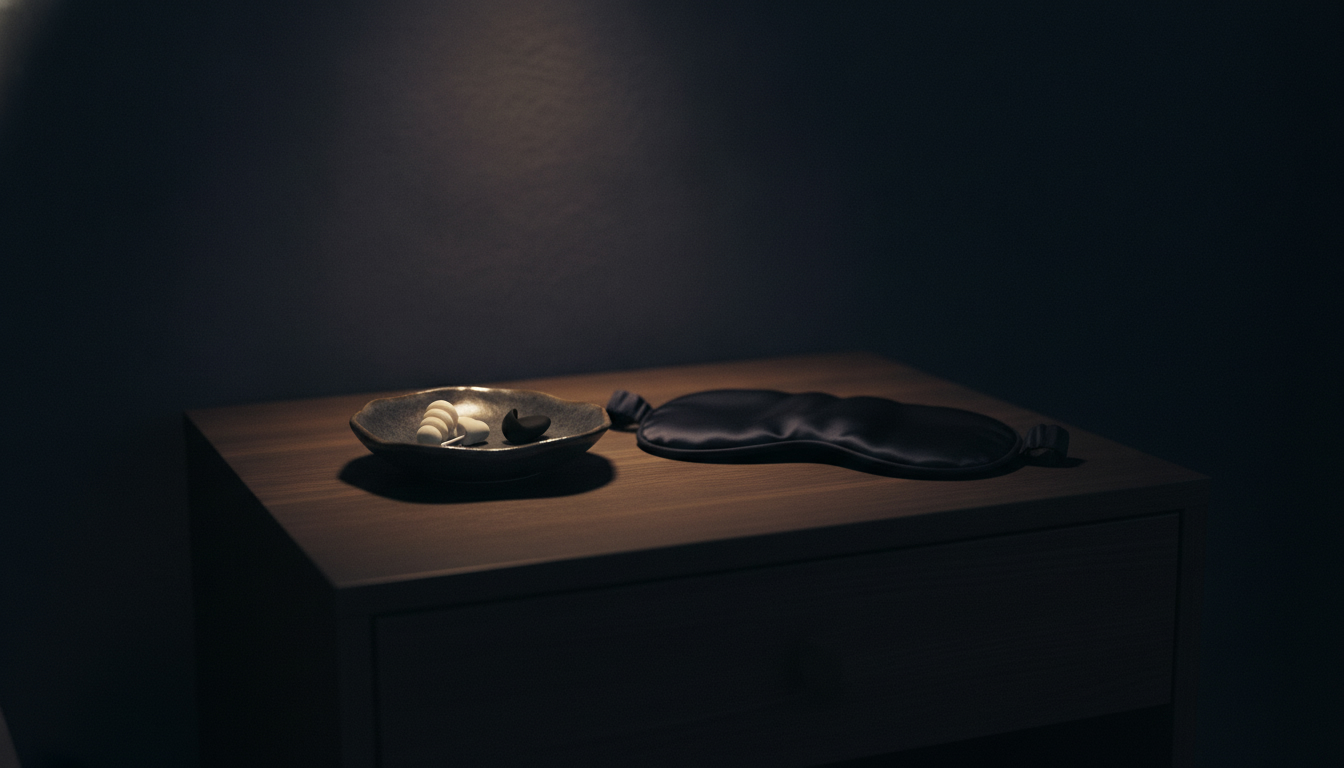
Earplugs for sleep ranked by real-world noise attenuation, comfort for side sleepers, and whether you can still hear an alarm. Foam vs silicone vs wax vs masking buds, with the NRR numbers that actually matter.
Mack's Ultra Soft Foam Earplugs
Slow-recovery foam at the highest attenuation you can buy over the counter (NRR 32 per the manufacturer), for a few cents a pair. Nothing else in this set blocks more broadband noise, and disposability sidesteps the earwax-buildup problem of reusable plugs. The trade-off is fit: foam has to be rolled thin and inserted deep to hit its rating, and it protrudes more than a flush silicone plug, so committed back sleepers get the full benefit while side sleepers may prefer a lower-profile pick.
Check price · Amazon- 01 ·Our pick
Mack's Ultra Soft Foam
Polyurethane slow-recovery foam rated NRR 32, the highest common over-the-counter attenuation. Pennies per pair, so you replace them rather than clean them, which avoids the wax-transfer issue of reusables. Downsides: they must be rolled and inserted deep to reach the rating, and real-world attenuation is typically well below the lab NRR (Berger 2000). They protrude, so light side sleepers sometimes feel them against the pillow.
Check price · Amazon - 02 ·Best reusable for side sleepers
Loop Quiet 2
Soft reusable silicone with a low-profile flush design and multiple tip sizes, rated around SNR 24 dB (the European equivalent metric). The flat outer surface is the reason side sleepers favor them: nothing digs into the ear against a pillow. Attenuation is lower than deep-set foam, so they take the edge off a snoring partner or traffic rather than silencing a jackhammer. Washable and long-lasting.
Check price · Amazon - 03 ·Best moldable for a full seal
Mack's Pillow Soft Silicone
Moldable silicone putty you flatten over the entrance of the ear canal rather than pushing inside it, forming a custom cap. Because it sits at the opening and not deep in the canal, many side sleepers and people who dislike the plugged-canal feeling tolerate it better. Widely used by swimmers too. Single-use to a few uses each, and hair or oils shorten the seal.
Check price · Amazon - 04 ·Best conforming wax
Ohropax Classic Wax
Cotton-wrapped wax that warms to body heat and conforms to the ear opening, a design sold in Europe for over a century. Like the silicone putty it caps the canal entrance rather than filling the canal, which suits people who cannot tolerate deep foam. Moderate attenuation (roughly SNR 23 dB), messy in warm rooms, and not for anyone sensitive to the residue.
Check price · Amazon - 05 ·Best custom fit
Decibullz Custom Molded
Thermoplastic tips you heat in hot water and mold to your own ear, setting into a reusable custom plug. The bespoke fit improves both seal and comfort over generic tips and holds through the night for many side sleepers. More effort up front, and getting the mold right can take a couple of attempts, but the payoff is a repeatable seal without the daily-disposable cost.
Check price · Amazon - 06 ·Best for masking, not blocking
Ozlo Sleepbuds
Tiny in-ear buds built by former Bose Sleepbuds engineers that play looping masking sounds rather than relying on passive attenuation. They work by covering intrusive noise (a snorer, a hotel corridor) with steady sound, not by sealing it out, so they suit people for whom silence is not the goal. Expensive, need charging, and the physical noise reduction alone is modest.
Check price · Amazon - 07 ·For noise sensitivity, not silence
Flare Calmer
Small silicone inserts that are explicitly not earplugs: they claim to reduce the stress of certain frequencies by altering ear-canal resonance rather than lowering overall volume. Some noise-sensitive sleepers find them calming without the fully-plugged sensation, but they provide very little measured attenuation, so treat them as a comfort device, not a noise blocker.
Check price · Amazon - 08 ·Best bulk value
3M E-A-R Classic Foam
The long-standing industrial PVC foam plug, rated around NRR 29, sold in large boxes. Firmer than Mack's Ultra Soft, which some find less comfortable overnight but easier to insert correctly. The practical pick if you go through disposables quickly and want a reliable, cheap, high-attenuation option in bulk.
Check price · Amazon - 09 ·For lighter, even attenuation
Eargasm High Fidelity
Filtered reusable plugs designed to lower volume evenly across frequencies rather than muffling, originally aimed at concerts. For sleep they take the peak off ambient noise while sounding more natural than foam, at a lower total attenuation. Reasonable for light sleepers in moderately noisy rooms who dislike the dead, plugged feeling of foam.
Check price · Amazon - 10 ·Budget custom alternative
Radians Custom Molded
A lower-cost moldable silicone kit in the Decibullz vein: mix two compounds, press into the ear, and let it cure into a reusable custom plug. Slightly fussier to get a clean set than the thermoplastic approach, but an inexpensive way to get a personalized fit that stays put for side sleepers.
Check price · Amazon
Questions logged on this protocol
Do earplugs actually improve sleep, or just block noise?
Both, and the evidence is strongest where noise is the problem. Environmental noise fragments sleep and shifts it toward lighter stages even when you do not fully wake (Basner & McGuire 2018, the WHO environmental noise review), so removing it protects sleep architecture. A Cochrane review of intensive-care patients (Hu et al. 2015) found that earplugs, often with an eye mask, improved sleep and reduced delirium in that high-noise setting. In a quiet bedroom the benefit is smaller, but for anyone next to a snorer, a road, or a noisy building, earplugs are one of the highest-value, lowest-cost sleep tools there is.
What does NRR mean and how much noise do earplugs really block?
NRR (Noise Reduction Rating) is the US laboratory attenuation figure printed on the pack, in decibels; Europe uses SNR, a similar single-number rating. Real-world attenuation is almost always well below the label because most people do not insert plugs deeply or consistently enough, and studies have long shown a large gap between lab NRR and field performance (Berger 2000). A foam plug rated NRR 32 might deliver 15-25 dB in practice. The practical reading is that a higher rating helps, but correct insertion (roll foam thin, insert deep, hold until it expands) matters more than the last few points on the label.
Which earplugs are best for side sleepers?
Low-profile ones that sit flush with the ear. Bulky foam plugs protrude and press against the pillow, which is what wakes many side sleepers, so a flat reusable silicone plug like the Loop Quiet, or a moldable putty or wax that caps the canal opening rather than filling it (Mack's Pillow Soft, Ohropax), tends to be more comfortable on the side. A custom-molded plug (Decibullz, Radians) is the most reliable option because it is shaped to your ear and does not shift when your head presses into the pillow.
Will I still hear my alarm with earplugs in?
Usually yes, because no sleep earplug blocks all sound and alarms are loud, low-frequency, and close. To be safe, use a loud alarm, place the phone or clock near the bed, and consider a vibrating or under-pillow alarm or a sunrise alarm that wakes you with light rather than sound. If you are a genuinely deep sleeper worried about missing a critical alarm, pick a lower-attenuation reusable plug rather than deep-set foam, and test the setup on a non-critical morning first.
Is it safe to wear earplugs every night?
For most people, yes, with basic hygiene. The main issues are earwax being pushed deeper and, rarely, ear-canal irritation or infection from dirty reusable plugs. Keep reusables clean and dry, replace foam plugs regularly rather than reusing a grimy pair, and insert gently without forcing. If you notice pain, discharge, reduced hearing, or a blocked-up sensation that persists after removing the plugs, stop and see a clinician, as that can signal wax impaction or infection. This article is educational and not medical advice.
Earplugs or a white-noise machine?
They solve the noise problem from opposite directions and can be combined. Earplugs remove sound passively; a white-noise machine (or pink or brown noise) masks intrusive sounds by raising a steady background floor, which is covered in our guide to noise colors for sleep. If your problem is intermittent, jarring noise like a slamming door or a snorer, masking often works better than blocking; if it is constant loud noise, attenuation wins. Many people use plugs plus a low masking sound for the combination of a lower absolute level and fewer startling peaks.
- [01]
- [02]
- [03]
- [04]
Other stacks in this hub
The Best Time to Exercise for Sleep: Why Evening Workouts Are Mostly Fine
Regular exercise is one of the most reliable ways to sleep better, and the old warning to avoid evening workouts has largely not held up. What the research says about how exercise improves sleep, whether the time of day matters, and the one narrow exception, vigorous exercise finished right before bed, that can genuinely delay sleep onset.
How Long Does Melatonin Last? Onset, Duration, and Why Timing Beats Dose
Melatonin does not work like a sleeping pill, and its short pharmacokinetics explain why. What the research says about how fast it kicks in, how long it stays in your system, why a big dose does not last longer in a useful way, and why when you take it matters far more than how much.
The Best Sleeping Position: What the Evidence Says and Why It Depends on You
There is no single best position for everyone, but the evidence does favor some positions for specific problems. What the research says about side, back, and stomach sleeping for snoring and apnea, reflux, back and neck pain, and pregnancy, and why comfort and the position you actually stay in matter more than chasing an ideal you cannot hold.