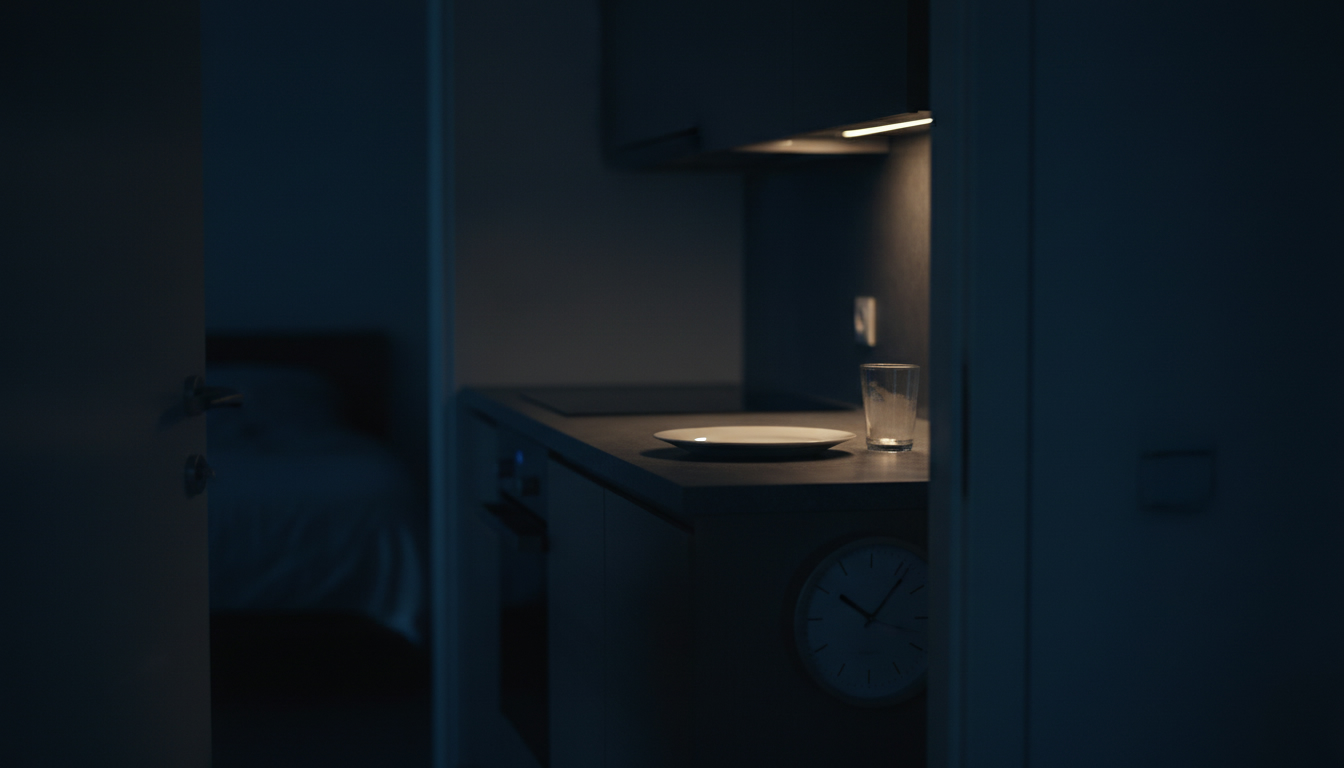
A late meal is not automatically bad for sleep, but eating large, heavy, or the wrong foods close to bedtime reliably disturbs it, and meal timing is also a signal to your body clock. What the research says about reflux, blood sugar, and circadian meal timing, and how to eat in the evening without wrecking your night.
Late eating is not automatically bad
It is worth starting by dispelling the blanket claim that eating before bed is always harmful, because the evidence does not support such an absolute rule. A small, light snack in the evening is usually harmless for sleep and can even be helpful for someone who would otherwise go to bed hungry, since hunger itself is an arousing signal that can delay or disturb sleep. The problems attributed to late eating come mostly from the specifics: how large the meal is, what it contains, and how close to lying down it is eaten, plus the drinks that often accompany a late meal. So the useful question is not whether to eat at all in the evening but how to eat in a way that does not sabotage the night, which means separating the genuine troublemakers from a harmless snack.
The reflux and comfort problem
The most immediate way a late meal disturbs sleep is mechanical: lying down with a full stomach promotes acid reflux and general discomfort. When you are upright, gravity helps keep stomach contents down, but lying flat soon after a large or fatty meal makes it easier for acid to escape upward into the esophagus, causing heartburn that can wake you or keep you from settling. Fatty and large meals are the worst offenders because they are slow to digest and relax the valve at the top of the stomach, and spicy or acidic foods add their own irritation. This is why the standard practical advice is to finish a substantial meal a couple of hours before bed and, for people prone to reflux, to keep the last intake light and even to raise the head of the bed. It is also why the position you sleep in interacts with late eating, with left-side sleeping easing reflux.
Blood sugar and the wrong late foods
Beyond reflux, the composition of a late meal can affect sleep through blood sugar and digestion. A large meal heavy in refined carbohydrates and sugar close to bedtime can produce a swing in blood glucose overnight that some people experience as restless or broken sleep, and the metabolic handling of a big meal is generally less efficient at night, when the body is biologically primed for rest rather than digestion. This does not mean carbohydrates are forbidden; the picture is about size and type more than a single nutrient. The practical read is that if you eat close to bed, a smaller, balanced snack is gentler than a large, sugar-heavy one, and that the common late-night pattern of a big rich meal followed quickly by sleep is the combination most likely to leave the night disturbed, both from digestion and from the blood-sugar swing that can follow.
The real culprits are often the drinks
A crucial point often missed is that when a late meal wrecks sleep, the food may be innocent and the drinks guilty. Alcohol with or after an evening meal is a powerful sleep disruptor: it speeds sleep onset but fragments the second half of the night, suppresses REM, and worsens reflux, so a nightcap with a late dinner harms sleep on several fronts at once. Caffeine in an after-dinner coffee, tea, or dessert can linger for hours, since its effects persist well beyond the point most people assume, and evening caffeine measurably degrades sleep. Even large volumes of any fluid late can mean waking to urinate. So before blaming the meal itself, it is worth checking whether alcohol, caffeine, or simply a large volume of drink is the actual disruptor, because these are usually more damaging than a moderate plate of food.
Meal timing is a signal to the body clock
The deeper, less obvious point is that when you eat is not only a digestive matter but a circadian one. Alongside the master clock in the brain that is set by light, the body has peripheral clocks in organs like the liver and gut that are strongly entrained by the timing of food, which acts as a secondary zeitgeber. Eating on a regular daytime schedule reinforces a coherent circadian rhythm, while consistently eating large amounts during the biological night, as in habitual late-night eating or shift-work eating patterns, sends a conflicting time signal that can desynchronize these peripheral clocks from the central one. Research on time-restricted eating and meal timing, reflected in reviews and an American Heart Association scientific statement led by Marie-Pierre St-Onge, links the timing and regularity of eating to both sleep and cardiometabolic health. So the habit of heavy late eating is not just a single-night sleep issue; it is a circadian one.
How to eat in the evening without wrecking your night
The practical synthesis is easy to apply. Finish any large meal about 2 to 3 hours before bed, so the bulk of digestion is done before you lie down and reflux is less likely. If you eat closer to bedtime, keep it small and light rather than large, fatty, spicy, or sugar-heavy. Do not go to bed genuinely hungry either, since a small balanced snack beats hunger for sleep. Be honest about the drinks: skip alcohol as a nightcap and caffeine after the early afternoon, because these usually do more damage than the food. Zoom out to the pattern, and keep the majority of your eating in the daytime, avoiding a routine of big late-night meals that fights the body clock. And recognize the limits: if sleep stays poor despite sensible evening eating, or if reflux is frequent, those point to causes and possibly conditions that deserve proper evaluation rather than another dietary tweak. This article is educational and not medical advice.
Questions logged on this protocol
Is it bad to eat before bed?
Not automatically. A small, light snack in the evening is usually fine for sleep and can be better than going to bed hungry, since hunger itself can disturb sleep. What causes problems is eating a large, fatty, spicy, or very sugary meal close to lying down, which invites reflux, discomfort, and blood-sugar swings, and the alcohol or caffeine that often comes with a late meal, which harm sleep independently. So the issue is less whether you eat at all in the evening and more the size, type, and timing of what you eat, plus the drinks alongside it.
How long before bed should I stop eating?
As a general rule, finish a large meal about 2 to 3 hours before bed, so the bulk of digestion is done before you lie down and acid reflux is less likely. If you eat closer to bedtime, keep it to a small, light snack rather than a heavy meal. People prone to reflux benefit from a longer gap, keeping the last intake light, and sometimes raising the head of the bed. There is no need to fast rigidly for hours if you are hungry; a small balanced snack is gentler on sleep than bedtime hunger.
Why do I sleep badly after a big late meal?
Several reasons stack up. Lying down with a full, especially fatty, stomach promotes acid reflux and discomfort that can wake you or stop you settling. A large, sugar-heavy meal can cause a blood-sugar swing overnight that some experience as restless sleep, and the body digests less efficiently at night when it is primed for rest. If the meal came with alcohol or an after-dinner coffee, those drinks are often the bigger disruptors, fragmenting sleep and suppressing REM. Moving large meals earlier and keeping late intake light usually resolves it.
Does when you eat affect your body clock?
Yes. Alongside the master clock in the brain set by light, organs like the liver and gut have peripheral clocks strongly influenced by the timing of food, so meal timing acts as a secondary circadian signal. Eating on a regular daytime schedule reinforces a coherent rhythm, while habitually eating large amounts during the biological night can desynchronize these peripheral clocks from the central one. Reviews and an American Heart Association statement led by Marie-Pierre St-Onge link the timing and regularity of eating to both sleep and cardiometabolic health, so heavy late-night eating is a circadian issue, not just a digestive one.
What is the best snack to eat before bed?
A small, light, balanced snack is the goal rather than a large or sugar-heavy one. Something modest that combines a little protein or fiber with carbohydrate, and that you tolerate well without reflux, is a reasonable choice if you are hungry before bed. The specifics matter less than the principles: keep it small, avoid fatty, spicy, and very sugary foods close to lying down, and skip alcohol and caffeine, which do more harm to sleep than a modest snack. If you are not hungry, there is no need to eat before bed at all. This is educational information, not medical advice.
- [01]
- [02]
- [03]
- [04]
Other stacks in this hub
Cortisol and Sleep: The Morning Hormone That Times Your Wake
Cortisol is not only a stress hormone; it follows a strong daily rhythm that peaks in the early morning to drive waking and falls to its low at night to allow sleep. What the research says about the cortisol awakening response, how stress and disrupted sleep push the rhythm out of shape, and why fixing the rhythm matters more than chasing a single cortisol number.
What Happens When Your Circadian Rhythm Is Disrupted
Your body clock does far more than control sleep; it schedules hormones, metabolism, temperature, and alertness across the day. When behavior falls out of step with the clock, through shift work, jet lag, social jet lag, or erratic light, the misalignment shows up as poor sleep, daytime dysfunction, and, over the long run, metabolic and mood consequences. What the research says, and how the clock realigns.
Morning Sunlight Protocol: Dose, Timing, Wavelength
A Protocol card with the lux × minutes dose, the 60-min window, and the Phase Response Curve citations.